

Chanted Meditation Practices
 Liberating Prayer was composed by Venrable Geshe Kelsang Gyatso and is recited by Kadampa Buddhists throughout the world at the beginning of all activities.
Without Buddha’s kindness we would not know the real causes of happiness or the real causes of suffering. Buddha taught us how all happiness and suffering depend upon the mind. He showed us how to abandon those states of mind that cause suffering and cultivate those states of mind that cause happiness. In other words, he taught us perfect methods for overcoming suffering and attaining happiness. No one else taught us these methods. How kind Buddha is!
It is for this reason that Kadampa Buddhists begin every practice by reciting this special prayer to Buddha.

LIBERATING PRAYER
PRAISE TO BUDDHA SHAKYAMUNI
O Blessed One, Shakyamuni Buddha,
Precious treasury of compassion,
Bestower of supreme inner peace,
You, who love all beings without exception,
Are the source of happiness and goodness;
And you guide us to the liberating path.
Your body is a wishfulfilling jewel,
Your speech is supreme, purifying nectar,
And your mind is refuge for all living beings.
With folded hands I turn to you,
Supreme unchanging friend,
I request from the depths of my heart:
Please give me the light of your wisdom
To dispel the darkness of my mind
And to heal my mental continuum.
Please nourish me with your goodness,
That I in turn may nourish all beings
With an unceasing banquet of delight.
Through your compassionate intention,
Your blessings and virtuous deeds,
And my strong wish to rely upon you,
May all suffering quickly cease
And all happiness and joy be fulfilled;
And may holy Dharma flourish for evermore.
Composed by Venerable Geshe Kelsang Gyatso
at Manjushri Centre, England, June 2001
© Geshe Kelsang Gyatso and New Kadampa Tradition 2001
 Although Tara prayers are recited at Kadampa Buddhist Centres worldwide on the 8th day of the month, you can recite them at any time whenever you wish to receive Tara's help and blessings.
The Tara prayers recited at the centre can be found in the prayer booklet Liberation from Sorrow available from the bookshop.
The prayers includes a special prayer Praises to the Twenty-one Taras composed by Buddha.
Tara is a female Buddha, a manifestation of the ultimate wisdom of all the Buddhas. Each of the Twenty-one Taras is a manifestation of the principal Tara, Green Tara. Tara is also known as the ‘Mother of the Conquerors’.
Tara is our common mother, our Holy Mother. When we are young we turn to our worldly mother for help. She protects us from immediate dangers, provides us with all our temporal needs, and guides and encourages us in our learning and personal development.
In the same way, during our spiritual growth we need to turn to our Holy Mother, Tara, for refuge. She protects us from all internal and external dangers, she provides us with all the necessary conditions for our spiritual training, and she guides us and inspires us with her blessings as we progress along the spiritual path.
‘Tara’ means ‘Rescuer’. She is so called because she rescues us from the eight outer fears (the fears of lions, elephants, fire, snakes, thieves, water, bondage, and evil spirits), and from the eight corresponding inner fears (the fears of pride, ignorance, anger, jealousy, wrong views, attachment, miserliness, and deluded doubts).
Temporarily Tara saves us from the dangers of rebirth in the three lower realms, and ultimately she saves us from the dangers of samsara and solitary peace.
If we rely upon Mother Tara sincerely and with strong faith she will protect us from all obstacles and fulfill all our wishes. Since she is a wisdom Buddha, and since she is a manifestation of the completely purified wind element, Tara is able to help us very quickly.
If we recite the twenty-one verses of praise we shall receive inconceivable benefits. These praises are very powerful because they are Sutra, the actual words of Buddha. It is good to recite them as often as we can.
You can find a collection of Tara sadhanas and recordings at Tharpa.com
 Heart Jewel is one of the essential practices of Kadampa Buddhism. It contains two parts: the Guru Yoga of Je Tsongkhapa combined with reliance on his Dharma Protector. When recited at the centre, there is a short pause for lamrim meditation.
This puja includes two practices revealed by the Wisdom Buddha Manjushri. The first is a special Guru yoga in which we visualize our Spiritual Guide as Je Tsongkhapa, who himself is a manifestation of Manjushri.
By relying upon this practice, we can purify negativity, accumulate merit, and receive blessings. In this way, we will naturally accomplish all the realizations of the stages of the path of Sutra and Tantra, and in particular we will attain a very special Dharma wisdom.
The second practice is a method for relying upon the Dharma Protector Dorje Shugden. Through this, we can overcome obstacles to our practice and create favourable conditions so that we can nurture and increase our Dharma realizations.
If we rely upon the Dharma Protector Dorje Shugden sincerely, our faith in Je Tsongkhapa will naturally increase and we will easily gain experience of the pure Buddhadharmatransmitted directly to Je Tsongkhapa by the Wisdom Buddha Manjushri.
These two practices are the very essence of the New Kadampa Tradition of Mahayana Buddhism. If we practice them regularly and sincerely, we will reap a rich harvest of pure Dharma realizations, and eventually come to experience the supreme joy of full enlightenment.
An extensive explanation of this sadhana can be found in the book Heart Jewel, by Geshe Kelsang Gyatso available from the bookshop and online from Tharpa.com
 The practice of Offering to the Spiritual Guide is on the 10th and 25th days of every molnth as well as on special days in the Buddhist Calendar.
The practice of relying upon a Spiritual Guide, or ‘Guru Yoga’, is the root of the spiritual path and the foundation of all spiritual attainments.
In Kadampa Buddhism, Guru Yoga is practiced in association with Je Tsongkhapa, an emanation of the Wisdom Buddha Manjushri.
The principal Guru Yoga of Je Tsongkhapa is Offering to the Spiritual Guide, which is an extensive practice that is usually performed twice a month, on the 10th and 25th days, at Kadampa Buddhist centers.
It was compiled by the first Panchen Lama, Losang Chökyi Gyaltsän, as a preliminary practice for Vajrayana Mahamudra.
Although the main practice is reliance upon the Spiritual Guide, it also includes all the essential practices of the stages of the path (Lamrim) and training the mind (Lojong), as well as both the generation stage and completion stage of Highest Yoga Tantra.
Guru yoga is a special method for receiving the blessings of our Spiritual Guide. Here, the term ‘Guru’ does not imply that our Spiritual Guide should be Indian. Our Spiritual Guide is any spiritual Teacher who sincerely leads us into spiritual paths by giving correct instructions.
Thus our Spiritual Guide can be oriental or western, lay or ordained, male or female. These days, for example, it is quite possible to meet a Spiritual Guide who is a western lay female. The term ‘yoga’ in this context indicates a special way of viewing our Spiritual Guide.
To find out more about this practice, see the book Great Treasury of Merit available from the bookshop or online from Tharpa.com.
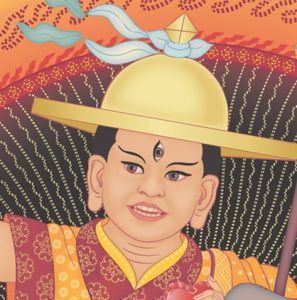 Wishfulfilling Jewel with tsog offering is usually organised by the Centre after lunch on Friday afternoon.
It is a special practice for developing compassion, wisdom and spiritual strength by relying upon the Wisdom Buddha Je Tsongkhapa, and for overcoming obstacles and difficulties on the spiritual path by relying upon his Dharma Protector Dorje Shugden.
 Quick Path to Great Bliss is organised on Friday mornings. Please check the timetable beforehand.
The instructions on the Highest Yoga Tantra practice of Venerable Vajrayogini were taught by Buddha Vajradhara in the forty-seventh and forty-eighth chapters of the Condensed Root Tantra of Heruka. This particular lineage of instructions, the Narokhachö lineage, was passed directly from Vajrayogini to Naropa, and from him through an unbroken lineage of realized practitioners to the present-day Teachers.
After Buddha Vajradharma had taught the practice he left the mandalas of Heruka and Vajrayogini intact in twenty-four auspicious places in this world. Thus even to this day there are countless manifestations of Vajrayogini in this world who help sincere practitioners to gain realizations by blessing their mental continuum.
In many respects the practice of Vajrayogini is ideally suited to the present day. By relying upon this practice sincerely, with a good heart and a mind of faith, it is definitely possible to attain full enlightenment; but to accomplish such results we must practise the extensive sadhana regularly.
This particular sadhana, Quick Path to Great Bliss, was composed by the great Lama Phabongkha Rinpoche. Compared to other sadhanas it is not very long, but it contains all the essential practices of Secret Mantra. To practise the sadhana successfully we should first receive the empowerment of Vajrayogini, and then study authentic instructions on the practice such as those found in the book Guide to Dakini Land.
This sadhana is suitable both for our regular daily practice and for retreat; and we can practise it alone or in a group.
You can find the Sadhana Quick Path to Great Bliss as well as its commentary Guide to Dakini Land in the bookshop and online from Tharpa.com
 Once a month, typically on the first Friday of the month, the Centre organises a compassionate ritual practice Prayers for the Deceased on behalf of all those who have recently deceased (this practice is appropriate for any sentient being, including family, friends and animals).
The practice the practice of transference of consciousness (known as Powa), whereby through chanted prayers and mantras, the participants assist in directing the consciousness of the recently deceased directly to the Pure Land.
If you wish, you may bring a small white offering (food item, candle or flower).
em ipsum dolor sit amet, consectetur adipiscing elit. Aenean cursus nisl id auctor lacinia. Cras mollis turpis metus, non porttitor ante egestas sit amet. In placerat placerat felis. Cras augue nulla, tincidunt sit amet elit non, efficitur tempus mauris. Phasellus ultrices orci sed dictum volutpat. Suspendisse potenti. Integer interdum, enim sed aliquam varius, nisi nisi hendrerit ligula, eget bibendum risus nulla vel nisi. Aenean ullamcorper, augue nec facilisis luctus, mauris risus vehicula orci, in mattis dui nunc a urna. Cras arcu erat, varius in porttitor sit amet, efficitur at nisl. Nam ullamcorper quis sapien vel vestibulum. Nam ut aliquet diam.
In tincidunt, turpis id dapibus dapibus, tellus purus ullamcorper augue, a sodales nulla ex a ipsum. Curabitur eget tellus magna. Nam eget luctus odio. Quisque ultrices dolor ut neque dictum tristique. Donec vitae lorem ex. Proin eu malesuada arcu. Vestibulum eget pharetra ex.
